
Smart home battery control becomes possible for fixed and variable energy contracts
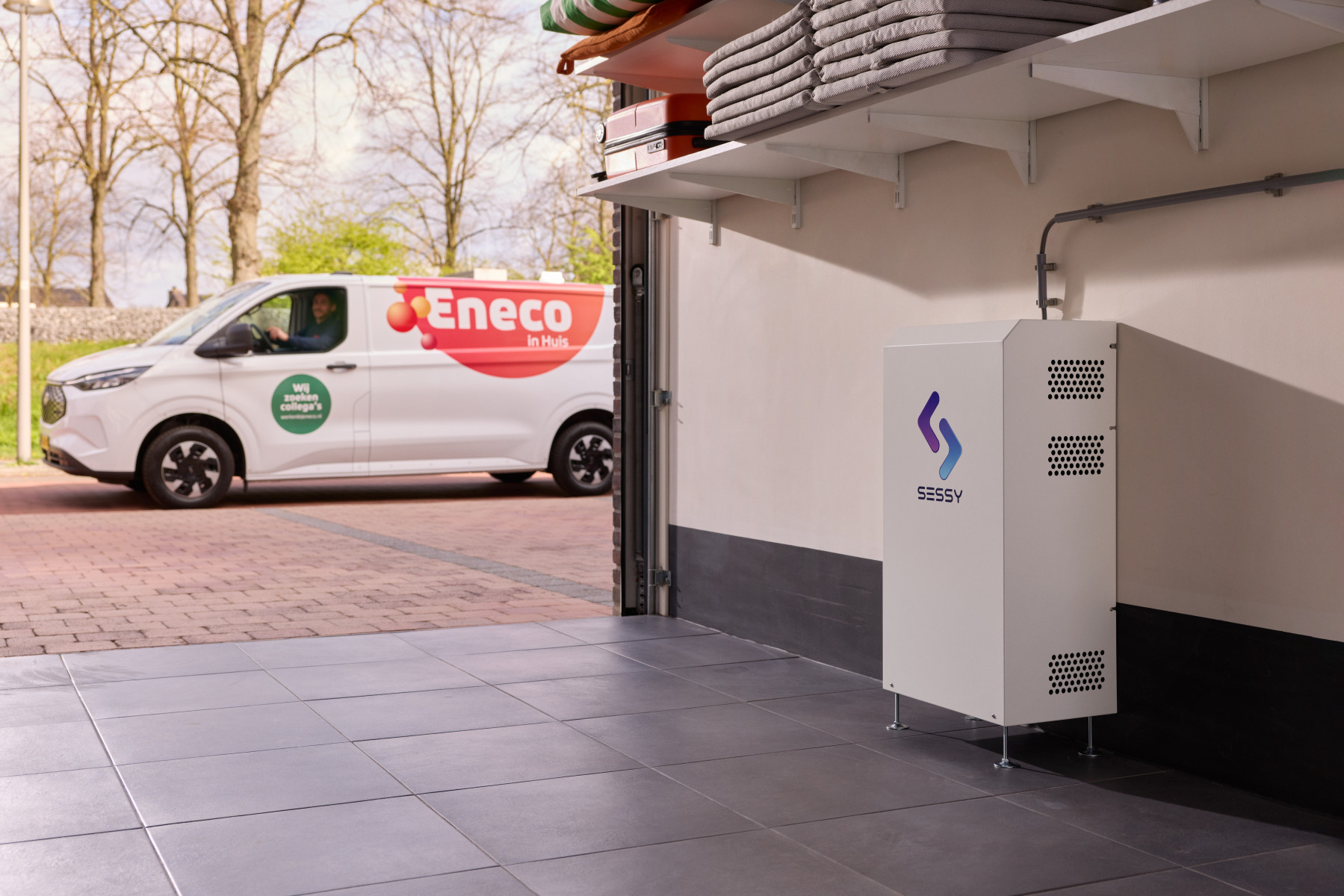
Eneco recently completed a pilot together with Charged, the company that manufactures the Sessy home batteries, with around one hundred customers with a fixed or variable contract and solar panels. Eneco controlled their home batteries so that households consumed as much of their own energy as possible and their batteries were employed for the grid only when this offered added value. The pilot was a success. It proved that home batteries can have a positive impact even without a dynamic contract: smart battery management yields clear benefits for both customers and the electrical grid with fixed and variable contracts as well.
The pilot was open to households that had a fixed or variable energy contract with Eneco, plus solar panels and a Sessy home battery. For many of the participating customers, their reasons to have a battery are to use more of their own electricity and at the same time help the environment. The pilot gave them the opportunity to benefit financially as well. Over the course of a year, they shared data and partial control of their battery with Eneco. The results showed that smart battery management can play an important role in optimising solar energy.
Benefits for the customer: more self-produced energy consumed, less fed into the grid
The pilot’s participants were customers with an average of 10-12 solar panels and a 5 kWh home battery. For many households, that is enough capacity to store the energy produced by their solar panels and use it later. After a year, the benefits of a partially controlled home battery are clear:
- The average self-consumption of own solar production improved from 30% to 60%, for an annual increase of 1,000 kWh.
- The households were paid an average of 195 euros in fixed and variable monthly fees for control of the battery.
- The impact on the customers’ own battery use was minimal: the average time that the batteries were used for smart management was only 30 minutes per day.
- Since the households were qualified as small businesses trading in energy, and so helping to relieve pressure on the electrical grid, they could claim back the VAT on the battery’s purchase price.
Smart management relieves pressure on the energy grid
Besides the immediate benefits for the customer, battery control also helps to relieve the pressure on the electrical grid. Connecting the home batteries to its Virtual Power Plant makes it easier for Eneco to respond to shifts in the grid’s demand for electricity, for example at moments of peak demand or on afternoons with ample sunlight. This helps smart battery management to make the energy system more reliable.
Expanding the scope of the control service
Based on the success of this pilot, Eneco has decided to further optimise how it controls home batteries. One of the improvements will be to provide better information in the Eneco app. This will show customers how their battery is being controlled and what it yields, so that they can track precisely what their battery is doing and how much they will be paid. Later this year, Eneco and Charged plan to offer home battery control to a broader group of customers.
Director Roeland Nagel of Charged comments: “Thanks to this partnership with Eneco, home batteries can be used even more efficiently, with significant benefits for customers and for the energy system. Households with solar panels can double how much of their own electricity they use themselves, and having partial control of the batteries means that Eneco is better able to prevent peaks in the electrical grid. It’s a win-win situation for both battery owners and the energy grid.”
To find out more about home battery control, see this page about the partnership between Eneco and Sessy | Eneco (in Dutch only).