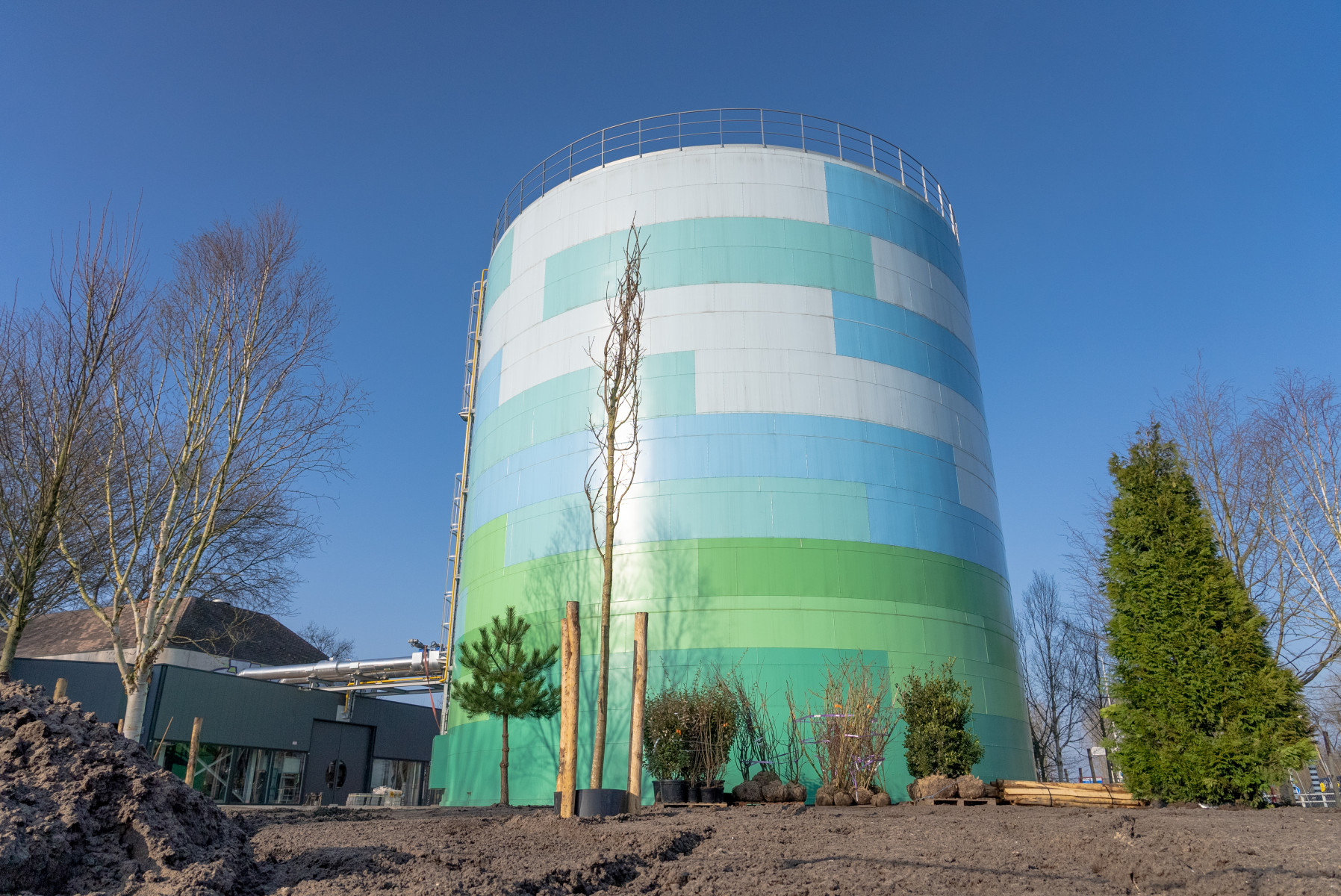
Eneco and Nieuwegein municipality plant first vegetation around new heat buffer
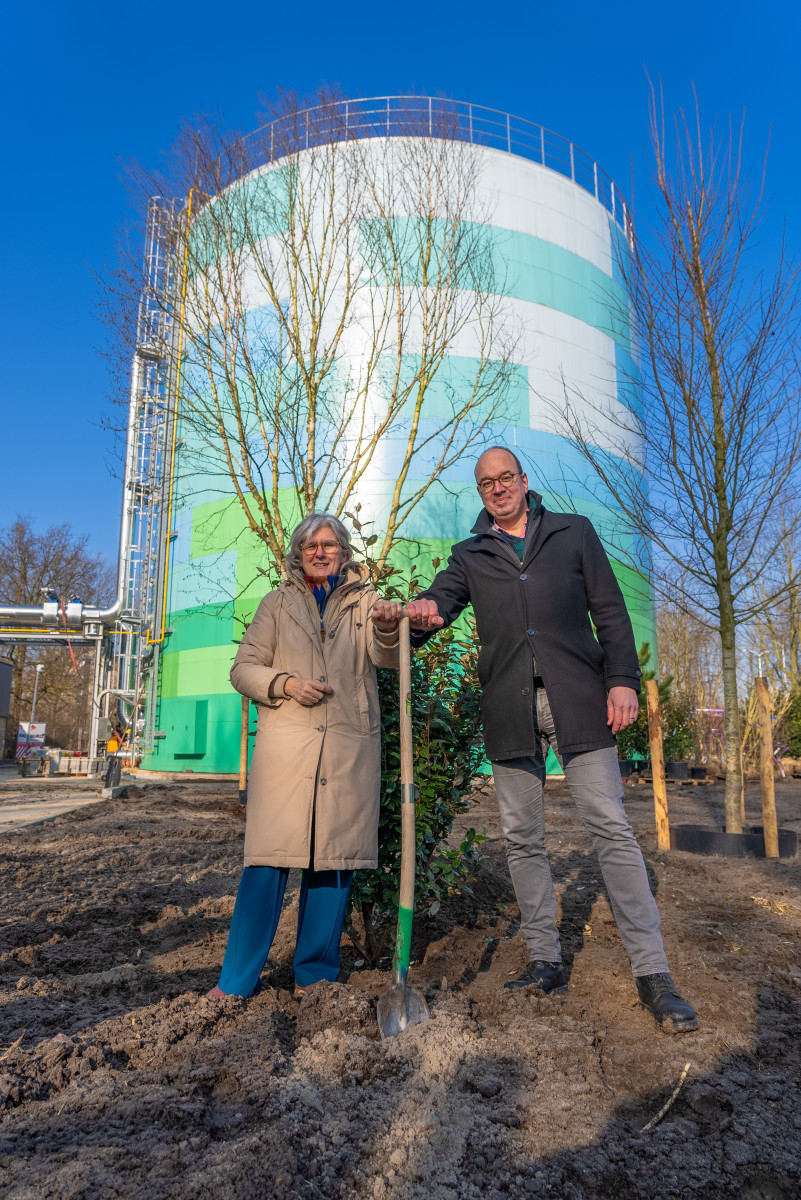
Eneco recently installed a new heat buffer in Nieuwegein’s Zuilenstein district. This week, we started work on greening the area around the buffer, based on input from the local residents. Starting the planting in February means that the first trees and plants will be in bloom by spring. The first vegetation was planted earlier today by Marieke Schouten, member of the Municipal Executive for Sustainability, who joined us in celebrating that this phase has started.
Lower CO2 emissions for a more sustainable heating grid
The new heat buffer, which stands beside the heat substation on Symfonielaan and became operational near the end of last year, will help to make Nieuwegein’s district heating grid more sustainable. When demand for heat is low, the buffer is topped up. Then at peak moments, for example at dawn and in early evening, that heat can be drawn on for the households that are connected to the heating grid. This means that less gas is needed to produce heat at those peak moments, and so the heating grid’s CO2 emissions also go down.
“It’s important to use less gas for our district heating grid,” explains Marieke Schouten. “This buffer that Eneco has built will help us to achieve that. Given how many homes in Nieuwegein are connected to the heating grid, making this collective heat supply system more sustainable will give our use of clean energy an important boost. I’m very pleased as well that local residents shared their ideas about greening the area around the buffer. By planting more shrubs and trees, we’re making the buffer less intrusive while also adding extra vegetation.”
Fitting into the surroundings
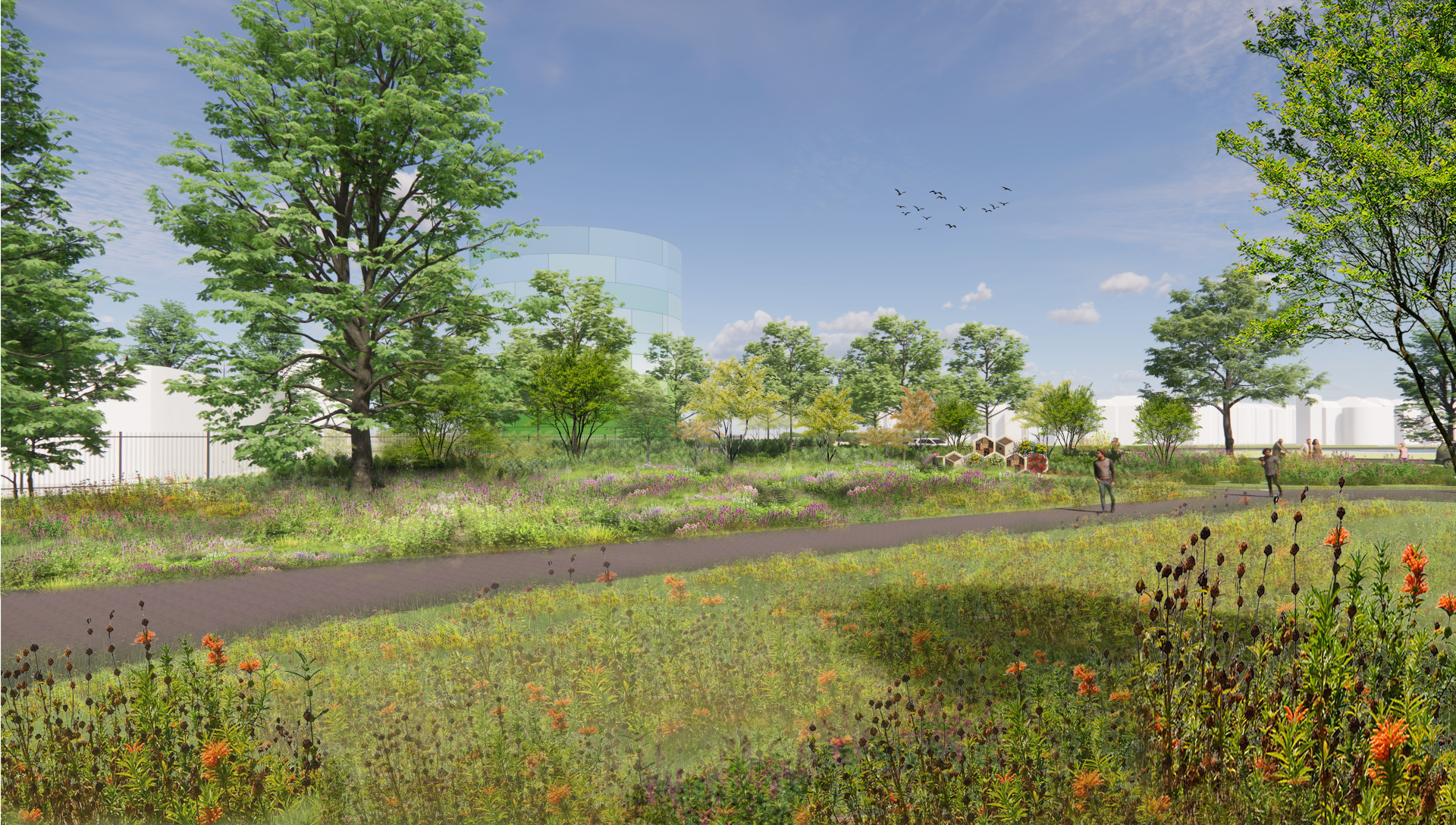
As part of the preparations for installing the buffer, we engaged in a dialogue with local residents. We hosted a series of engagement sessions to discuss how to fit the buffer into its surroundings. The residents wanted the buffer to be surrounded by as much green as possible all year round, so it becomes less intrusive, and to stimulate the biodiversity. We brought in OKRA’s landscape architects to draw up a detailed plan for introducing different kinds of trees and plants around the buffer. Another measure was to move the entire heat buffer around ten metres along from where it was initially planned, to make it less conspicuous behind the substation. We also thought carefully about what kinds of trees and plants should be planted and where, so that the buffer is surrounded by blooming greenery all year round. Work is now underway to plant or replant all kinds of vegetation, including various species of elm, maple, pine and perennials. We decided to paint the buffer in a simple pattern using natural shades of blue and green.
The buffer in Zuilenstein is 18 metres wide and 18 metres high, with a volume of 4,000 m3. It is one of five heat buffers that Eneco has built in Utrecht and Nieuwegein as part of Eneco’s Road Map for improving the sustainability of the area’s heating grid.