
Eneco and De Strakke Hand unveil painting on Rijnsweerd heat buffer

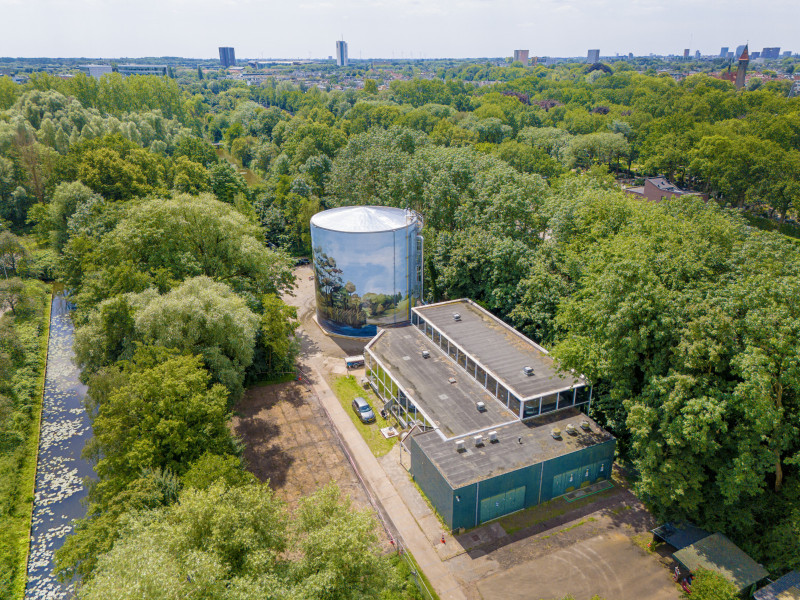
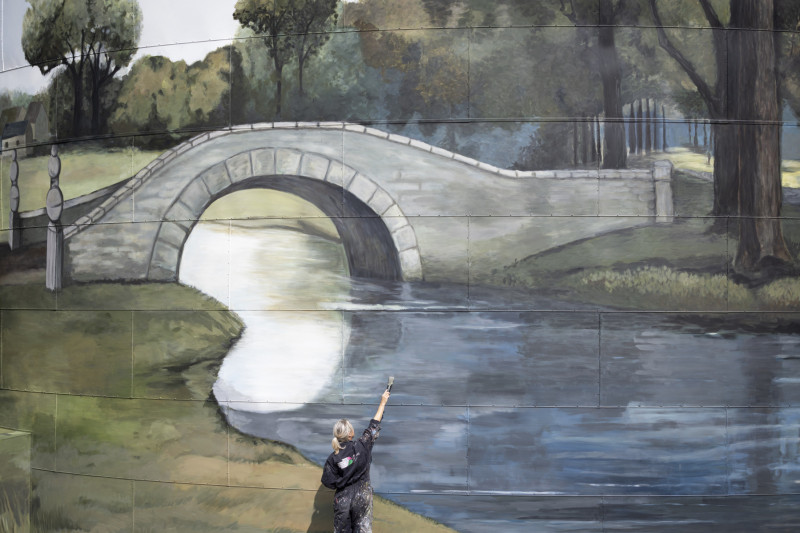
This week marks the completion by art collective De Strakke Hand of a unique painting on Eneco’s new heat buffer in Rijnsweerd (Utrecht). The design for the painting was selected with input from local residents, to help the buffer blend into its surroundings as best as possible. The painting is based on an old watercolour by J.W. Wisselingh of a nature scene in Rijnsweerd during the 19th century.
Input from local residents
The design for the painting came about after a series of meetings that Eneco conducted with the people of Rijnsweerd. It was their idea to work with De Strakke Hand and base the design on an existing watercolour of the area. De Strakke Hand took Wisselingh’s piece as the point of departure, stretching it out to create a mural 60 metres wide and 17 metres high, to cover the buffer’s entire outside.
Unique and historical
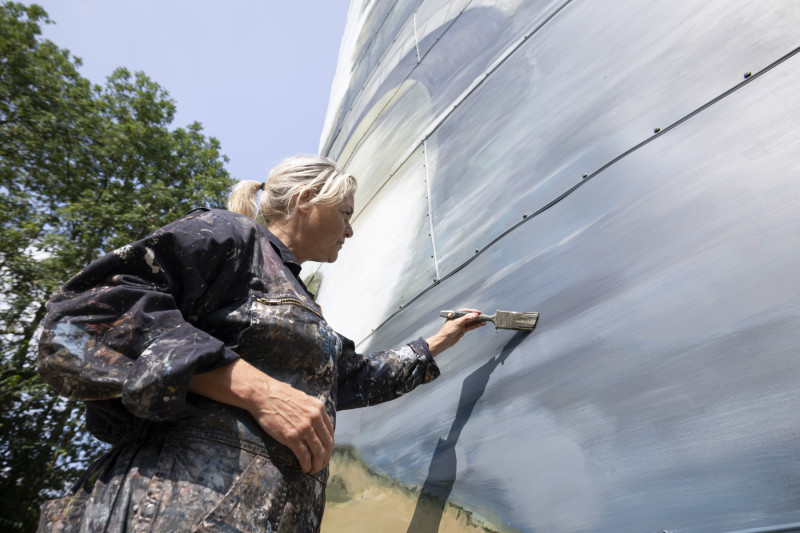
“This 360-degree painting is unique,” explains De Strakke Hand founder Michiel Meulemans. “We’ve been using the methods of the old masters, using only primary colours and mixing them on the canvas – the buffer – to create new colours on the surface itself. This gives us the classical appearance that we want. The idea is to give this place back some of its history.” The painters in the collective divided the buffer into sections to paint. By dividing the design up and painting the sections one by one, each section of the painting matches seamlessly with the next.
In agreement
“I think we should be very proud of this painting,” comments Mart Scheepers, the project’s stakeholder engagement manager. “We understand that the buffer has an impact on the people living nearby. With that in mind, back in 2020 we began coordinating with Eneco and the Utrecht municipal authorities to see what we could do to make the buffer blend into its surroundings. I’m incredibly pleased that we managed to agree on a design, together with the local residents, and I’m grateful for their ideas and input for this project.”
Five heat buffers to handle peak demand
The heat buffer will become operational later this year, when it will handle the peak demand from local residents and companies that are connected to Utrecht’s heating grid, for example in the mornings, when the demand for heat surges. Using hot water from the buffer during these peaks means using less gas to generate heat, which reduces CO2 emissions and enables existing energy sources to be used more efficiently. The Rijnsweerd buffer is one of five heat buffers that Eneco has built in Utrecht and Nieuwegein, which are part of Eneco’s Roadmap for sustainable district heating in the area. The heat buffers are expected to become operational in the final quarter of 2024.
To find out more about Eneco’s heat buffers, visit (in Dutch): https://www.eneco.nl/over-ons/wat-we-doen/duurzame-bronnen/warmte/warmtebuffers/