
New contract with Storm brings Eneco’s future dispatchable battery capacity to 1.2 GW
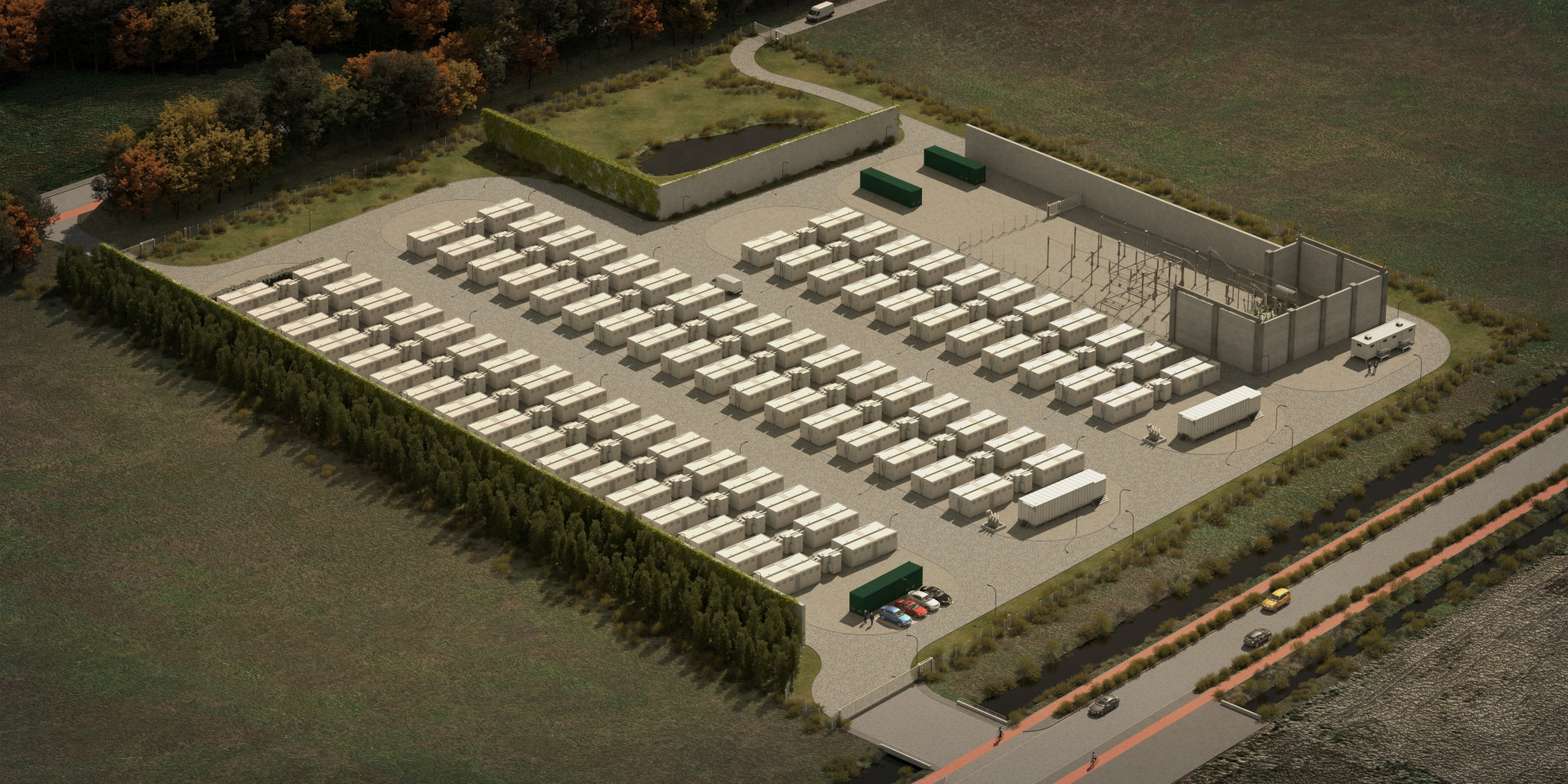
Eneco has signed a contract to control two large battery parks with a total capacity of 300 MW, developed by Belgian developer Storm. The energy company will be able to draw on a total dispatchable battery capacity of more than 1.2 GW in 2027, increasing its possibilities for trading energy on various markets and making efficient use of sustainable energy, and so helping to better balance the grid.
In recent years, Eneco has invested in 225 MW of its own batteries in the Netherlands, Belgium and Germany. The company also participates in battery parks of other investors by assuming control of the batteries. So far, these partnerships represent nearly 1 GW of electricity. Some of those battery parks are under development, and will become operational within the next year and a half. Together, these 15 major battery projects mean that Eneco will control a total of more than 1.2 GW of battery capacity.
Partnership with developer Storm
The 1 GW milestone has now been passed with a contract with Storm, a Belgian company that develops sustainable energy projects. Storm is currently constructing a 200 MW battery park in Ruien, and a 100 MW park in Langerlo. The batteries have storage capacities of 800 MWh and 400 MWh, respectively, and will be a major addition to Belgium’s available large-scale battery capacity.
Both projects use Lithium ion batteries supplied and installed by Tesla. Once the parks are completed, which is scheduled for 2027, Eneco will assume control of the batteries for a 10-year duration.
Further growth in dispatchable battery capacity
Eneco is working to create greater flexibility in the electrical grid by deploying large batteries. This will make it easier to utilise the sustainable energy that is available from wind and solar in response to fluctuating demand from the market. The main focus for Eneco’s further expansion of its dispatchable battery capacity portfolio is on Belgium and Germany, where ‘standalone’ battery parks are currently not charged for costs of transmission.
Developing and contracting battery parks poses greater challenges in the Netherlands, where transmission fees apply. As a result, Dutch battery parks are generally developed at co-locations. Although this means lower transmission costs, unfortunately it also puts constraints on how much battery capacity can be developed compared with how much storage capacity the electricity market needs.