
Eneco asks customers in Zeeland province – together with DELTA Energie and Stedin - to use energy when it is abundant
Eneco’s customers in the province of Zeeland will be asked to adjust their electricity consumption patterns to when local production is high. This is part of a three-month trial, in partnership with fellow energy company DELTA Energie and grid operator Stedin. They hope to prevent grid congestion through a better balance between supply and demand, by shifting customers’ energy consumption patterns. The trial will be conducted in the municipalities of Schouwen-Duiveland, Tholen and Veere (not including the Koudekerke and Biggekerke centres).
In this new trial, the three companies want customers – whether or not they have solar panels or electric vehicles – to follow the sun. They should use electricity when it is abundant, for example when the sun is shining and large volumes are being produced by solar panels. Many of the households in the trial area have solar panels, and on sunny days those panels produce more solar electricity than is used. Electricity consumption at other times is higher than previously, for example with customers charging more and more electric vehicles and heat pumps. As a result, the electrical grid is becoming congested.
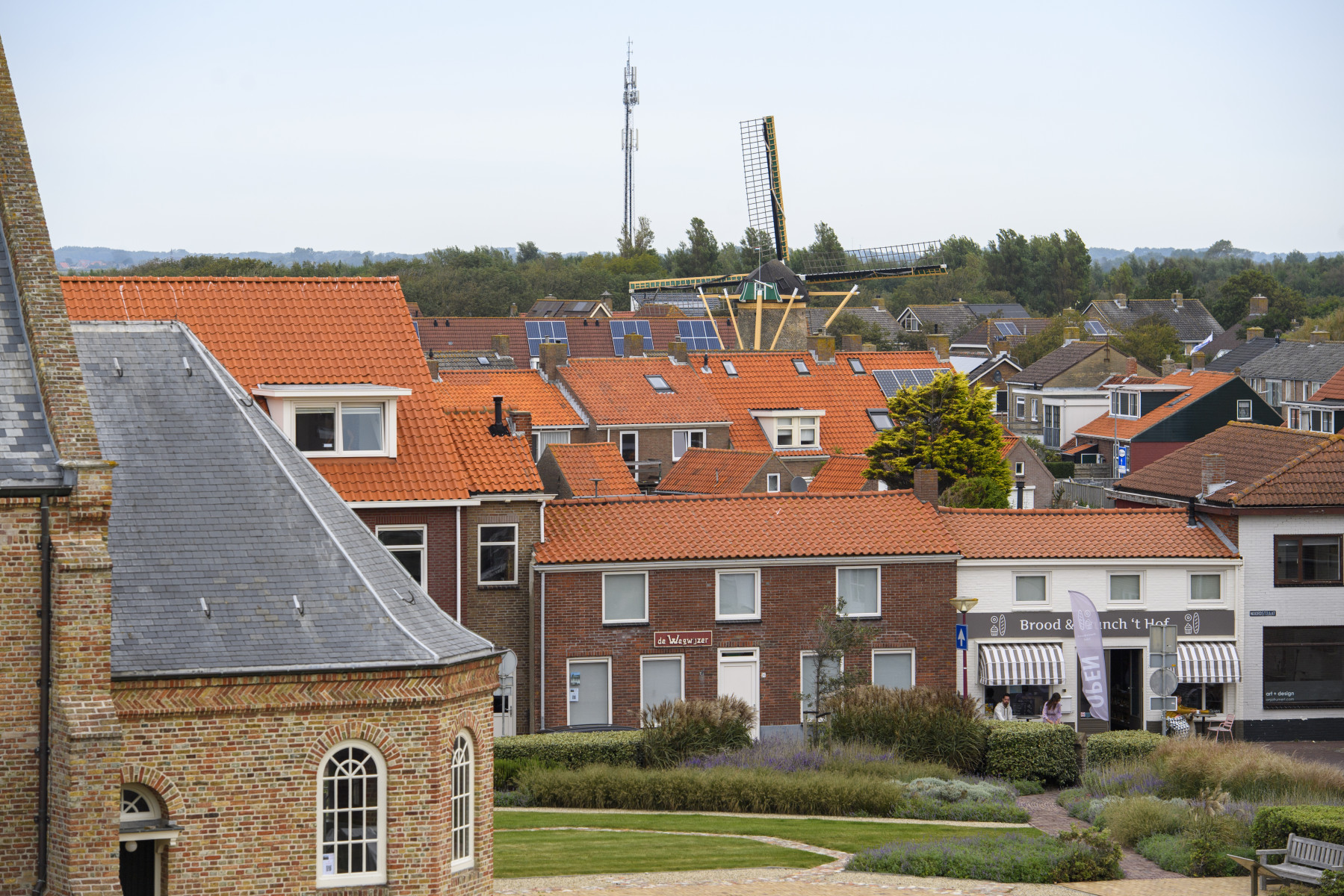
To avoid peak moments in the electrical grid, households with solar panels should use their own electricity immediately. Another reason why it is important for those households to take part in the trial is that, when the net metering scheme is abolished, self-produced solar electricity will be the cheapest electricity available.
Households without solar panels can help to balance supply and demand by using their washing machine or dishwasher at times of solar electricity surplus. Using solar electricity in the same region also helps to minimise grid congestion since the electricity does not need to be transmitted over long distances.
This trial builds on an earlier pilot by Stedin and Eneco in which Eneco’s customers in Zeeland were asked to manually switch their solar panels off at specific times. This new trial extends to far more households, including households without solar panels and customers with or without electric vehicles and their own charging station.
Shifting the electricity consumption
The trial will cover the period from 1 May to 31 July. DELTA Energie, Eneco and Stedin foresee around twenty test moments, lasting a minimum of one hour and a maximum of five. Customers taking part in the trial will be urged to shift their electricity consumption to moments of high electricity production.
Those moments will be announced at least one day in advance, so that the customers can plan when to use electricity, for example by not charging their electric vehicle or bicycle until the next day, or saving their laundry for the test moment.
Eneco will encourage peak consumption by awarding participating customers HappyPower® at the test moments: the electricity that is supplied to those customers then is ‘free’, and they only have to pay the tax on the electricity. The number of kilowatt-hours that Eneco awards during each period will be capped, ranging from 2.5 kWH to 15 kWh per hour. This is expected to save Eneco’s customers anywhere between a few euros and several dozens of euros across the entire trial period.
Eneco will reach out to invite customers to take part in the trial from this week. Customers can sign up by activating the HappyPower offer in the Eneco app. They can find more information in the invitation email and on the landing page (www.eneco.nl/happypowerproef).